
Position:
Blog information
Jun 01 2026
What Is Tailing Treatment Process
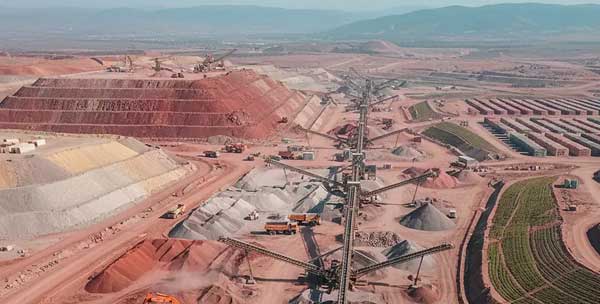
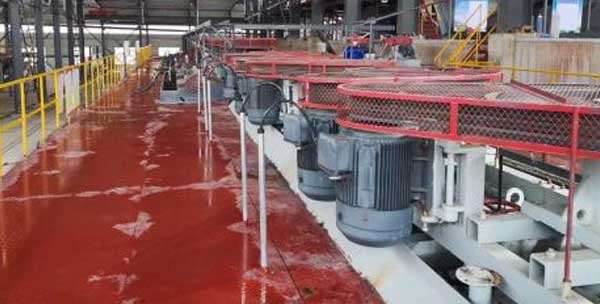
Mine tailing are substances left after separating the valuable part of ore from the uneconomic part. Tailings are the unmined treasures. How to retreat tailing treatment , maximum benefit? What’re tailings? Tailing are different from overburden, waste rock or other substances that cover ore or ore body and are replaced without treatment during mining. The tailing processing methods are varied by minerals, beneficiation methods, particle size, etc. Tailing can be divided into the following types: hand-picking tailing, gravity separation tailing, magnetic separation tailing, flotation tailing, chemical beneficiation tailing, electrification tailing. Why should we carry out the tailings treatment process? Usually, the ore tailing is stored in the tailing dam. The remaining toxic chemicals, wastewater and heavy metal ions in the beneficiation process will not only cause pollution and ecological damage to the surrounding environment but also increase the potential safety hazard of the tailing dam, may induce landslides, mudslides, tailing dam breaks, and other accidents, so tailing treatment has been highly valued.
Jun 01 2026
Processing Capacity Of Mine Vibrating Screen
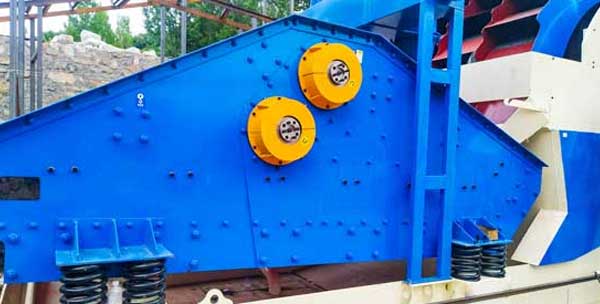
Mining vibrating screen generally appears in the production line of mining plant. The screening type is large ore material, which plays an important role in coal mine, quarry and metal mine production. So how to choose mining vibrating screen? The selection of model is to select a regular manufacturer. The parts used on it benefit from standardization and serialization. In case of problems in production, the damaged parts can be replaced directly to ensure normal and orderly production. When selecting the mining vibrating screen, choose the model to be repaired or the manufacturer to be trusted. Mining vibrating screen is generally used outdoors, with a large amount of materials to be processed, and the production environment is easy to cause various problems in the equipment. Therefore, selecting a good manufacturer and mining vibrating screen that is relatively easy to repair can save time and cost. Quality is important. If you choose a good manufacturer, all problems can be solved. Select a qualified vibrating screen to ensure its stability in production. The mining vibrating screen purchased without cost saving may bring you greater trouble.
Jun 01 2026
How To Process Artificial Sand?
The artificial sand making plant mainly uses a series of stone crushing equipment to crush the stone and produce artificial sand and stone such as sand and aggregate. The equipment configuration of artificial sand making plant includes vibrating feeder, coarse crusher, medium and fine crusher, vibrating screen, sand making machine, belt conveyor. Among them, feeders, vibrating screens and conveyors are auxiliary equipment. artificial sand production plant 1. Feed  The stones blasted from the mountain are sent to the vibrating feeder through the dump truck. Vibrating feeder has strong adaptability, stable operation and high cost performance. It is a feeding equipment widely used in sand and gravel enterprises. The vibrating feeder can feed the crushing equipment continuously and evenly, effectively prolonging the service life of the equipment. Small volume, light weight, small power, compact structure, convenient installation, low operation cost and low investment cost. 2. Coarse and Fine Crushing  According to different crushing purposes, crushers are divided into coarse crushing and medium fine crushing: coarse crushers can process large stones to medium particle size at one time; The medium and fine crusher is mainly used to further crush and reshape the coarse crushed stone to meet the high standard requirements of construction projects for stone. The vibrating feeder evenly sends the stones to the jaw crusher, and the broken stones from the jaw are broken for the first crushing, that is, coarse crushing. The stones broken from the jaw are then…
Jun 01 2026
Indonesian Sand Production Line With Annual Output Of 600,000 Tons
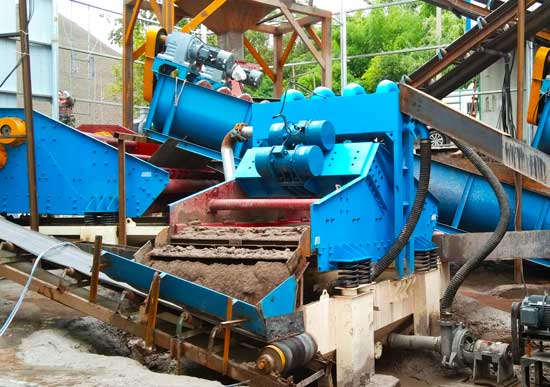
Recently, the machine-made sand processing production line with an annual output of 600,000 tons built by jiema Heavy Industry was successfully tested in Indonesia. The project focuses on the production of construction aggregates. During the test run, the equipment ran stably and the customer was very satisfied. indonesia sand washing plant Raw materials: river sand, pebbles Annual production: 600,000 tons of machine-made sand Treatment process: front-end sand washing, back-end sewage treatment Equipment configuration: three-axis horizontal screen, two-wheel sand washing and recycling machine, muddy water treatment system Usage of finished materials: can be used for infrastructure construction and high-standard sand needs The equipment of this sand production line 1. Three-axis horizontal screen This production line adopts the latest three-axis horizontal screen developed and produced by jiema, which has the advantages of horizontal linear vibrating screen and circular vibrating screen. With its sturdy structure and large processing capacity, it is an ideal new screening equipment. 2. Two-wheel sand washing and recycling machine The two-wheel sand washing and recycling integrated machine can effectively reduce the mud and powder content of sand and gravel. It can produce finished materials with good grain shape and reasonable gradation to meet the local demand for high-quality sand and gravel materials. 3. Muddy water treatment system The muddy water produced by this production line is concentrated and precipitated by the thickener, and the clean water in the upper layer can be reused. The sediment at the bottom enters…
Jun 01 2026
Silica Sand Manufacturing Process For Fracturing
Silica sand for fracturing is made from natural silica sand through screening, processing, and purification, aiming to obtain petroleum proppants with particle size and impurity content that meet the requirements of the original ore. The following will discuss a series of solutions and processes, including the role of oil proppants, the processing technology of silica sand for fracturing, as well as process equipment and washing tail water treatment, to improve the quality of silica sand for oil fracturing. Petroleum proppant performance requirements 1. The proppant must have strong compressive strength and wear resistance to effectively support artificial fractures. 2. The density must meet the requirements and be easy to pump into the well, so the relative density must be low. 3. Under the condition of 200℃, it does not react chemically with other substances.
If you have any question, please click here for live help. If you have any question, please click here for live help.