This article presents four typical industry case studies for decanter centrifuges: municipal sludge, sand-washing tailings, three-phase separation of oilfield oily sludge, and starch processing.
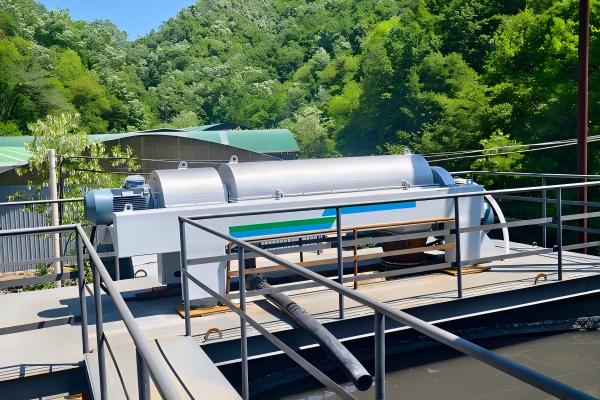
Project 1: Municipal wastewater treatment plant, capacity 50,000 m³/d, waste activated sludge. Original equipment: belt filter press. Problems: Large footprint, frequent belt blocking, high wash water consumption, odor emission, unstable performance in rainy season, cake moisture>85%. Solution: LW decanter centrifuge + PAM dosing system. Capacity: 12~18 m³/h. Result: Cake moisture 78%~82%, clear centrate returned to wastewater system, 24h continuous automatic operation, enclosed structure, less odor. Benefit: Sludge transport volume reduced by ~30%, less labor cost.
Project 2: Manufactured sand washing slurry. Slurry solid content 10%~18%. Old method: sedimentation tank. Problems: Huge land occupation, long settling time, low water recovery, environmental risk in rainy days. Solution: Wear-resistant decanter centrifuge (scroll hardfacing). Capacity: 30~50 m³/h, little or no flocculant needed. Result: Cake moisture 75%~80%, dry stackable solids; water recovery ≥90%, water recycled for sand washing, zero liquid discharge. Benefit: Save land, meet environmental standards, solid cake can be sold or backfilled.
Project 3: Oily sludge from oilfield station, contains crude oil, water, sediment, oil content 15%~30%, hazardous waste. Problems: Low oil recovery by traditional hot washing, high hazardous waste disposal cost. Solution: Three-phase decanter centrifuge. Result: Oil recovery ≥85%, recovered oil reusable; wastewater to treatment; solid residue oil content<3%. Benefit: Recover valuable crude oil, greatly cut hazardous waste cost.
Project 4: Corn starch plant, starch slurry separation. Old: vibrating screen, low efficiency, starch loss. Solution: Sanitary 316L decanter with CIP cleaning. Result: Continuous separation of starch milk and fiber residue, higher starch recovery. Benefit: Improve yield and production capacity, food grade compliance.
The core advantages shown in these cases: continuous automatic operation, fully enclosed, 2-phase or 3-phase separation, optional wear-resistant / sanitary material, solving problems of environmental discharge, large land occupation, material recovery, sludge reduction and transportation cost.