- How does grinding fineness affect flotation?
In flotation, both excessively coarse particles (larger than 0.1 mm) and extremely fine particles (smaller than 0.006 mm) lead to poor flotation performance and low recovery rates.
When floating coarse particles, their significant weight increases the detachment force, making it difficult for them to remain attached to air bubbles. This results in the loss of valuable minerals and hinders the improvement of concentrate grade. Therefore, the following measures are required:
(1) Use an adequate amount of the most effective collector;
(2) Increase pulp aeration to generate larger air bubbles and boost the volume of micro-bubbles precipitating from the water;
(3) Maintain an appropriate level of pulp agitation;
(4) Increase the pulp density;
(5) Ensure that the froth-skimming mechanism (scraper) operates both rapidly and smoothly.
When floating extremely fine particles (typically referred to as “slimes,” often smaller than 5–10 μm): (1) These fine particles can easily attach to air bubbles, reducing the floatability of coarser particles, impairing selectivity, and complicating the separation process—ultimately negatively affecting the concentrate grade; (2) Due to their large specific surface area, these slimes adsorb significant quantities of flotation reagents from the pulp, lowering the effective reagent concentration, disrupting the standard flotation process, and degrading flotation performance metrics; (3) Their high surface area enhances surface activity, making them prone to interacting with various reagents and difficult to separate. Furthermore, their strong hydration tendency can lead to excessively stable froth, which complicates the cleaning stage, reduces concentrate quality, and impairs both the fluidity of the froth product and the efficiency of subsequent thickening processes.
- How can the excessive formation of slime (fine mineral particles) in grinding pulp be prevented or mitigated?
Common methods to prevent or mitigate slime include:
(1) Reducing or preventing the generation of slime: This can be achieved by employing multi-stage grinding circuits and staged beneficiation processes. It is also essential to select appropriate grinding and classification equipment and to improve the efficiency of classifiers.
(2) Adding reagents to neutralize the detrimental effects of slime: Commonly used reagents include sodium silicate, soda ash, and caustic soda, which help reduce the flocculation and coating effects of slime. To mitigate the issue of slime adsorbing large quantities of reagents, a staged reagent-addition strategy may be considered.
(3) Removing slime from the ground ore prior to flotation, with the removed material discarded as tailings. If the slime contains a significant amount of valuable components, it can be processed separately via flotation or hydrometallurgical treatment.
Common methods for slime removal (desliming) include:
① using classifiers;
② using hydrocyclones; or
③ in specific cases, adding a small amount of frother before flotation to selectively float and remove easily-floatable slime particles.
- Why is it difficult to float coarse particles, and what process measures should be taken?
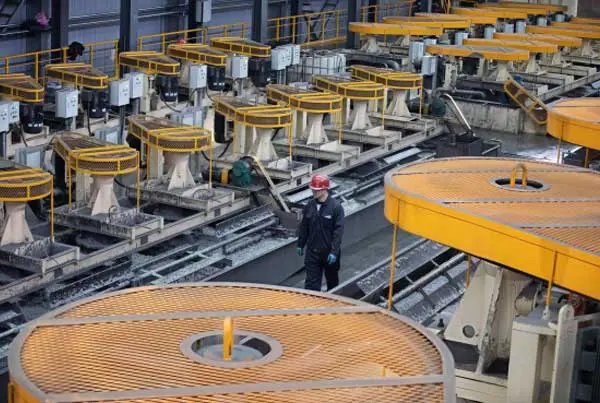
Coarser grinding can save on grinding expenses and reduce overall costs. In flotation plants processing ores with uneven mineral dissemination, there is a trend toward coarser grinding, provided that recovery rates in the roughing stage are maintained. However, because coarse particles are relatively heavy, they are difficult to keep in suspension within a flotation cell, which reduces the probability of them colliding with air bubbles. Furthermore, once a coarse particle attaches to an air bubble, the high detachment force acting upon it makes it prone to falling off. Consequently, coarse particles generally exhibit poor flotation performance under standard process conditions. To improve the results of coarse-particle flotation, the following process measures can be adopted:
(1) Use collectors with stronger collecting power; auxiliary collectors such as kerosene or diesel oil may also be added to enhance the collection of coarse particles, increase the attachment capability and bonding strength between mineral particles and bubbles, and reduce detachment.
(2) Appropriately increase the solids concentration (mass fraction) of the pulp to enhance its buoyancy. While ensuring the stability of the froth layer, provide moderate agitation to keep coarse particles in suspension, thereby increasing the opportunities for them to attach to bubbles.
(3) Increase the aeration rate in the flotation machine to generate larger bubbles and form “bubble clusters”—aggregates of both large and small bubbles. These clusters possess greater upward buoyancy, enabling them to carry coarse particles to the surface.
(4) Utilize shallow-trough flotation machines to shorten the ascent distance for mineralized bubbles, thereby reducing the likelihood of mineral particles detaching from the bubbles. Alternatively, employ specialized flotation equipment designed for coarse-particle flotation, such as circular-jet (ring-jet) flotation machines or Skarner-type flotation machines.
(5) Implement a rapid yet smooth froth-skimming mechanism to ensure that mineralized froth is removed promptly, minimizing the chance of mineral particles detaching and falling back into the pulp.
- What are the reasons for the difficulties in fine-particle flotation, and what process measures can be taken?
The flotation separation of fine-grained materials is relatively difficult, primarily due to the following reasons:
(1) Fine particles possess a large specific surface area, which significantly increases their surface energy. Under certain conditions, the surfaces of different minerals may undergo non-selective mutual coagulation. Furthermore, while the high surface energy of fine particles leads to strong adsorption of flotation reagents, this adsorption often lacks selectivity, making it difficult to achieve selective separation.
(2) Due to their small volume, fine particles have a lower probability of colliding with bubbles. Moreover, because of their low mass, fine particles often struggle to overcome the resistance of the hydration layer between the particle and the bubble during a collision, making it difficult for them to attach to the bubble surface. The following process measures can be employed to address the flotation of fine-grained minerals:
(1) Selective flocculation flotation: This involves using a flocculant to selectively flocculate either the target mineral fines or the gangue slimes, followed by separation via flotation.
(2) Carrier flotation: In this method, mineral particles of a size suitable for conventional flotation serve as “carriers.” The fine target mineral particles coat the surfaces of these carriers and are floated along with them. The carrier may consist of the same mineral species as the target or a different one. For instance, pyrite can be used as a carrier to float fine-grained gold, while calcite can be used to remove fine iron and titanium impurities from kaolin.
(3) Agglomeration flotation (also known as emulsion flotation): After being treated with a collector, fine mineral particles—in the presence of a neutral oil—form oil-based, mineral-laden aggregates (or “foams”). The collector and neutral oil can be prepared as an emulsion before being added to the pulp. Alternatively, the neutral oil and collector can be added separately to a high-solids-content pulp (with a solid concentration of up to 70%); the mixture is then subjected to vigorous agitation for a controlled duration, after which the upper layer of mineral-laden aggregates is skimmed off. This technique has been applied to the processing of fine-grained manganese ores, ilmenite, and apatite.
- What impact do slimes (fine mineral particles) have on flotation, and how can this be addressed?
The presence of a significant amount of slime in the flotation pulp leads to several adverse effects, including:
① Slimes can easily become entrapped in the froth product, thereby reducing the grade of the concentrate.
② They may coat the surfaces of coarser particles, hindering the flotation of those particles.
③ They tend to adsorb large quantities of flotation reagents, leading to increased reagent consumption.
④ They increase the viscosity of the pulp, which impairs aeration conditions.
Technological measures to address these issues include:
① Using a more dilute pulp to reduce viscosity, which helps minimize the entrapment of slimes in the froth product.
② Adding dispersants to disperse the slimes, thereby eliminating their detrimental coating effect on the surfaces of other minerals.
③ Staging the addition of reagents (adding them in portions), which helps reduce the consumption of reagents by the slimes.
④ Performing a desliming process on the flotation feed prior to flotation.
A common method for desliming is classification using a hydrocyclone.
- What is the primary influence of air on flotation?
In addition to oxygen, nitrogen, and inert gases, air also contains carbon dioxide and water vapor. Air has a distinct influence on the floatability of minerals:
⑴ When minerals are crushed to expose fresh surfaces, they undergo hydration upon contact with water, rendering them hydrophilic. However, the adsorption of gases onto these mineral surfaces can weaken this hydration, inducing an initial degree of surface hydrophobicity.
⑵ The interaction between gases and mineral surfaces is selective, with oxygen having the most significant impact.
⑶ Oxygen promotes initial hydrophobicity in sulfide minerals; however, prolonged exposure can cause the mineral surfaces to revert to a hydrophilic state. Under appropriate adsorption conditions, gases can induce surface hydrophobicity to such an extent that minerals may become floatable even without the addition of flotation reagents (for example, dry coal dust). Galena, for instance, must first undergo a preliminary reaction with oxygen before it can interact with xanthate collectors and subsequently float.
- What is the function of agitating the pulp?
Agitation of the pulp facilitates the suspension and uniform dispersion of mineral particles within the flotation cell. It promotes the effective dispersion and even distribution of air throughout the cell. Furthermore, it enhances the dissolution of air in high-pressure zones and its subsequent release (precipitation) in low-pressure zones, thereby generating a large number of active micro-bubbles.
While increased aeration and agitation are generally beneficial for flotation, they should not be excessive. Excessive aeration and agitation can lead to several drawbacks: (1) they promote the coalescence of bubbles; (2) they reduce the quality of the concentrate; (3) they increase electrical energy consumption; (4) they accelerate the wear and tear of flotation machine components; (5) they reduce the effective volume of the pulp within the cell (as a greater portion of the cell’s volume becomes occupied by air bubbles); and (6) excessive agitation may cause mineral particles already attached to bubbles to detach. The optimal level of aeration and agitation for a given operation should be determined through testing, taking into account the specific type and structural characteristics of the flotation machine.
- How does pulp density affect flotation performance indicators?
Pulp density can influence the following technical and economic indicators: (1) Recovery rate: At low pulp densities, the recovery rate is typically low. As pulp density increases, the recovery rate also rises; however, beyond a certain limit, the recovery rate begins to decline. This is primarily because an excessively high density disrupts the aeration conditions within the flotation machine. (2) Concentrate quality: Generally, flotation in a more dilute pulp yields higher-quality concentrate, whereas a denser pulp tends to result in lower-quality concentrate. (3) Reagent consumption: A higher pulp density generally requires less reagent per ton of ore processed, while a lower pulp density increases the reagent consumption per ton of ore. (4) Flotation machine capacity: As pulp density increases, the processing capacity of the flotation machine (in terms of throughput) also increases. (5) Water and power consumption: Higher pulp density leads to lower water and power consumption per ton of ore processed. (6) Flotation time: When the pulp is denser, the required flotation time increases slightly.
In summary, a higher pulp density is generally advantageous for the flotation process. However, if the density is too high, the pulp and air bubbles cannot move freely, which impairs aeration and consequently reduces both concentrate quality and recovery. Therefore, for any given ore, the optimal pulp density must be determined based on the specific characteristics of the ore and the relevant technical requirements.
- What is the relationship between pulp density, flotation conditions, and ore characteristics?
The determination of the optimal pulp density for flotation depends on the characteristics of the ore and the specific flotation conditions. General guidelines include: (1) Minerals with a high specific gravity require a denser pulp, while those with a low specific gravity require a more dilute pulp. (2) Coarse-grained materials are best processed in a denser pulp, whereas fine-grained or slimy materials require a more dilute pulp. (3) Roughing and scavenging are conducted at higher pulp densities, which helps reduce reagent consumption and the number of flotation cells required; conversely, cleaning is performed at lower pulp densities, enabling the production of high-quality concentrates.
For roughing, the pulp density is typically 25%–35%; for the flotation of fine-grained or high-slime-content ores, it is 10%–20%; for cleaning, it is 10%–20%; and for scavenging, it is 20%–30%.
- What is the effect of pulp density (solids concentration) on flotation?
Pulp density—the concentration of solids in the pulp—is a critical process factor in flotation, exerting a significant influence on the operation. It is generally expressed in two ways: ① Liquid-to-solid ratio, representing the ratio of the mass (or volume) of the liquid phase to that of the solid phase; this method is highly convenient for calculations involving pulp flow circuits. ② Percentage of solids (%), representing the mass (or volume) percentage of solids within the pulp; this method is more widely used in mineral processing experiments and industrial production.
The primary effects of pulp density on flotation are as follows:
(1) Recovery. Within a certain range, a lower pulp density typically results in lower recovery; as the pulp density increases, recovery generally improves. However, the pulp density should not be too high; if it is excessive, the flotation machine may struggle to properly aerate the pulp, which in turn leads to a decrease in recovery.
(2) Concentrate grade. As a general rule, flotation in a more dilute pulp tends to yield a higher concentrate grade, whereas flotation in a denser (more concentrated) pulp tends to result in a lower concentrate grade.
(3) Reagent dosage. For effective flotation, reagents must be maintained at a specific concentration within the pulp. In a denser pulp, the concentration of reagents is higher for a given amount added; therefore, the required reagent concentration can be achieved with a smaller total quantity, reducing the reagent dosage per tonne of ore. Conversely, when the pulp is more dilute, a higher dosage of reagents is required.